In this regular feature called INDUSTRY TREND DIRECTION FINDER FOR MBAs, you find the current industry trends in managing the factors of production and service which remain largely uncovered in the contemporary management books.
Though they are extensively covered in the trade journals of repute and global standing, they go unnoticed by the management practitioners and students as well due to their cyclicity and quick progression from trend to trend, topic to topic and theme to theme.
*******************************************************************
COMBO SELLING - THE POWER OF TEAMWORK IN REAL ESTATE MARKETING
When next-door neighbors sell jointly, one plus one can be a lot more than two.
No one remembers who had the idea first, but that’s beside the point: Neighbors, when they are about to sell their homes same time, are selling for more than than they could’ve expected to get separately.Although they dip their price, they are definitely onto something: This kind of teaming up is growing more common. The shortage of family-size apartments remains acute, and appraisers say larger spaces, once they’re put together, can command a 20 per cent premium per square foot. Say you join two one-bedroom apartments that cost Rs 8 lakh apiece. For a modest contractor’s fee of maybe twenty grand, plus some headaches, you may produce a three-bedroom that’s worth Rs 18 lakh. You’ve created almost Rs 2 lakh in equity out of thin air. Co-ops have even been known to sell common building space—like bits at the ends of hallways—to make those amalgamations seamless. A tremendous amount of appraisals of common areas are being done these days that would be co-opted if two units are put together, which is a reminder that the resultant floor plan has to be graceful. Two small apartments connected by a long zigzag hallway won’t see much love. It takes extra paperwork, it takes extra marketing, but it could mean extra money.Such combos and improved process also do wonders in restaurant marketing and pizza huts.
Know why? 
*****************************************************************************
In this regular feature called INDUSTRY TREND DIRECTION FINDER FOR MBAs, you find the current industry trends in managing the factors of production and service which remain largely uncovered in the contemporary management books.
Though they are extensively covered in the trade journals of repute and global standing, they go unnoticed by the management practitioners and students as well due to their cyclicity and quick progression from trend to trend, topic to topic and theme to theme.
****************************************************************************
REAL SIMPLE SYNDICATION [RSS]
REALLY PUTS SOME ZING INTO THE MEDIA INDUSTRY AND
ACADEMICS
Many students don't know what RSS feeds are, but some University departments are using this time-saving Internet technology to improve academic life.
RSS, which stands for Really Simple Syndication, allows Internet users to subscribe to their favorite Web sites and receive new content as soon as it's posted.
RSS KEEPS YOU ABREAST OF WHAT IS GOING ON
After subscribing to feeds from newspapers, television websites, blogs and even podcasts, a user doesn't have to spend time visiting each site individually.
A user instead can go to one location that collects the information from all their favorite Web sites.
Several University departments are using this RSS technology to keep students and professors informed.
WHAT IS RSS
RSS is a lightweight XML format for distributing and organizing specific news headlines and other content on the Web.
It is an alternative means of accessing the vast amount of Internet based information.
Instead of the user browsing websites for information of interest, the information is sent directly to the user.
WHY THE INTERNET IS AGOG ABOUT IT
A family of Web feed formats used to publish frequently updated content such as blog entries, news headlines or podcasts, a RSS document, which is called a "feed," "web feed," or "channel," contains either a summary of content from an associated web site or the full text.
RSS makes it possible for people to keep up with their favorite web sites in an automated manner that's easier than checking them manually.
Basically, RSS pushes content to you, making it possible to be up-to-date in pages that change constantly.
With RSS one saves the time of actually visiting the page and looking for changes, since we get an update only when there is one.
Why is it important for academics? There are many uses of RSS in this context, but we will talk about two today.
HOW RSS IS FINDING THE BEST APPLICATION IN ACADEMICS
First, one thing that we academic check constantly is the table of contents of recent journals.
Well, some (if not most) journals have an RSS feed that will serve the changes.
 Just go to the homepage of each of your favorite journals, and look for an RSS icon.
Click on it, and the program that handles RSS in your computer (it could be your browser, or an specialized program; I like the free greatNews) will open the feed.
Every now and then, that program will ping the site and download new content. If you do that for say 10 journals, you will save lots of time and be completely up-to-date.
KEEP THE ENTIRE CLASSROOM ON TIPTOES
Second, you can use RSS to maintain a group of people working together ’on-the-loop’.
For example, you could post assignments and an entire classroom could be subscribed to the RSS feed.
This way, you do not need to collect mail addresses for each student, and there is no risk of a SPAM filter intercepting your assignment.
*****************************************************************************
BROAD FRAMEWORK OF
KRAs OF A REPUTED B-SCHOOL
Here is a lowdown of how reputed B-Schools in the US are weaving their Key Result Areas (KRAs) around the institutional vision, core values and mission statement.
Key Result Area 1
Define the academic standards and develop a plan to achieve them.
Key Result Area 2
 Define an organizational structure to assure that it drives and supports the B-School vision.
Key Result Area 3
Develop partnerships to drive an effective learning environment, academic achievement, and social and behavioral development.
Key Result Area 4
Enhance relationships with companies, external faculty, research bodies and student parents.
Key Result Area 5
Develop a proactive communication plan to address internal and external audiences.
Key Result Area 6
 Establish a staff development plan that recognizes and rewards employees who support and work toward the B-School mission and vision.
Key Result Area 7
Develop a facilities plan that supports the B-School mission and vision.
Key Result Area 8
Develop a fiscal plan that supports the B-School mission and vision. _________________________________________________
CONTENT MANAGEMENT SYSTEMS[CMS]
In today's global crossover context, content management systems [CMS] basically refers to how you manage the digital media assets you own ----- be it a website or web page or media.
 For Microsoft, this is a necessity of staying afloat amid other rivals who are able to gain the e-mail marketshare by capturing mindshare. Gmail and Yahoo for instance.
A good CMS can boost your E-Commerce or E-Biz and lend better support for intellectual property rights [IPR] management as well as protection while the expression ' content management system ' itself continues to have a number of connotations and meanings depending on the context it is used in.
There is currently no tendency away from the specialized systems towards more generic CMS.
This makes any predictions concerning market and technology trends difficult.
Expectations concerning the market growth in this area have not been met either.
In fact, so far no single market for content management products has emerged.
 In the above chart, you find how CMS operates in the context of corporate marketing and sales.
Rather, CMS are part of sub-markets of different domain-specific markets such as Web publishing technology, document management, or the media production and broadcasting space.
CMS relies heavily on Perl Hypertext Preprocessor [PHP], which is a reflective programming language originally designed for producing dynamic web pages.
*****************************************************
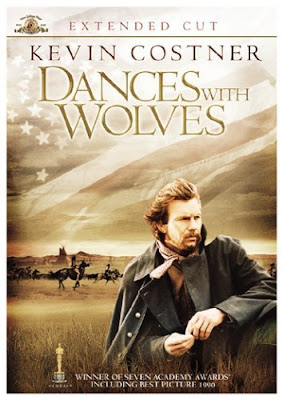

DANCES WITH WOLVES - 1990
The stunning soundtrack reflecting the courageous life of Lieutenant John Dunbar, who having been sent to a remote outpost in the wilderness of the Dakota territory during the American Civil War, befriends and saves the local Sioux tribe.
John Barry composed the Award-winning score, which became an international hit. Pope John Paul II once referred to it as among his favorite pieces of music. In fact,it is one of the most emotionally charged soundtrack I have ever heard due to the use of realistic string sounds which are really outstanding in sound quality and composition.
That said, Dances With Wolves was a simple, yet classic score by any standard of the imagination, and is still recognized as such today.
Three main themes --all of which memorable-- are combined to make a powerful, yet tender and epic score.
Like all of John Barry's more recent scores, there are outstandingly lush themes - but unlike the usual one or two, there are perhaps half a dozen here, all equally good.
The titular character's John Dunbar theme is undoubtedly the best known; instantly recognisable, the theme is noble, elegant and sincere.
Add to this themes for Two Socks the Wolf, the gorgeous, but naturally understated love theme as well as numerous other themes and ideas.

"Dances With Wolves" would not have been nearly so great a movie as it turned out to be if not for the score of John Barry.
Sure, even with a mediocre soundtrack, it still would have been a very good movie. But, it would not have been great.

The soundtrack to this movie is much more than just the "finishing touch."
Rather, it forms the very pillars and beams on which the film is built.
Famous for his music in James Bond movies, Barry here stirs the imagination with his moving "John Dunbar Theme" and leaves you breathless with the accompaniment to the Buffalo hunt.
This soundtrack is so very well done and such pleasant listening that I would even suggest it to people who have never seen the movie.
Of course, I would also urge people to view the film as well - either 
beore or after they listen to the soundtrack. This one earned a well deserved Academy award for the score.
This wealth of material ensures that each incident stands memorably on its own, but of course fitting ideally with the material around it.
This kind of musical storytelling isn't really a usual Barry trait, but works superbly well here.
Although there is a noble glow to much of the music, the opening reveals a starkly mysterious choir to begin in ghostly style, before melting away into the haunting trains of the John Dunbar theme.
The percussive Pawnee attacks are another striking contrast and the off kilter drum motif takes a little getting used to.
However, the travelling music mirrors the splendour of the land and are all given differing treatments.
The Journey to Fort Sedgewick features an inverted version of the John Dunbar theme with a fanfare like horn counterpoint, while the Ride to Fort Hayes is gentler idea using a descending string figure as counterpoint.
Journey to the Buffalo Killing Ground is more epic in scope with sweeping string and bold horn intervals mirroring the striking open space.
The big score of 1989 and, I have to say it, one of my all time great favourites.
A grand, epic, powerhouse score with lavish orchestrations 
and stirring, evocative themes, this really is a classic of the modern era.
Whilst it is sometimes reminiscent of Out Of Africa, especially during the cue 'Journey to Fort Sedgewick', it still retains an element of individuality and richness.
The best cues are 'The John Dunbar Theme', slow and dramatic with heartfelt strings; 'Journey to Fort Sedgewick' and 'Ride to Fort Hays', two companion pieces which musically project visions of enormous grassy plains and outdoor life; 'The Buffalo Hunt', a big and brassy action cue, and my favourite:
'The Death of Cisco', a moving and poignant theme which almost seems to cry out in anguish at one point, so much is the emotion that has built up.
Although Dances with Wolves contains several well-executed battle scenes, there's little doubt that the most breathtaking sequence is the buffalo hunt, where the Sioux riders race alongside thousands of rampaging buffalo and bring several of them down.
It's a high adrenaline sequence that marks the moment when Dunbar finally rejects his old culture to embrace his new one.
From a technical and logistical perspective, this is probably the year's singlemost memorable scene, and the adroitness with which Costner directed it explains (at least in part) why he won the Best Director Oscar.
Enjoy John Barry's triumphant score for ' The Buffalo Hunt ' from the link below:
http://www.gigasize.com/get.php?d=qh3wnynhxvf
_______________________________________________
If you want to go back to John Dunbar of 1984, see the video trailer:
http://www.gigasize.com/get.php?d=lz9hb1p0j7f
*******************************************